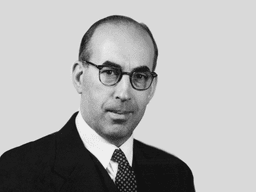
The scuttlebutt method — researching a company by asking everyone around it
Fisher worked out that the most useful information about a company sits with the people who deal with it — its customers, its suppliers, its competitors — and almost none of it is in the accounts.
Fisher was born in San Francisco in 1907 and opened his own investment firm in 1931, at the bottom of the Depression, on the theory that anyone still willing to hire an adviser then would be worth having as a client. He ran it for most of the next seventy years.
His contribution was a research method rather than a valuation rule. Where Benjamin Graham taught investors to read the balance sheet, Fisher taught them to put it down and go and talk to people — the company's customers, its suppliers, its competitors, its former employees. He called it scuttlebutt, and the point of it is that a business leaks information into the businesses around it long before that information reaches a filing. Competitors are unusually candid about each other; suppliers know about an order before it is announced.
He set the results against fifteen points, most of which are about how big an advantage actually is rather than whether it exists — profit margins, the depth of the research pipeline, whether management is honest with shareholders when things go wrong. He bought Motorola in 1955 on that basis and held it until his death in 2004, by which point the position had multiplied more than a thousandfold.
Where it fails: scuttlebutt is slow, does not scale, and is unusually easy to run backwards. The same conversations that surface a real advantage will also, in the hands of someone who has already decided, produce a stack of anecdotes confirming it — and unlike a multiple, a qualitative judgement about management quality can never quite be shown to be wrong. Holding for decades compounds that: a mistake is not a bad quarter, it is twenty years of owning the wrong thing.
Biographical reference only. Nothing here is investment advice, and no affiliation with or endorsement by the people profiled is implied.
